Home

Startups & leadership

Competitions, startups and teams: where I've built things with other people under real deadlines.

Co-founder and product lead · Jun 2024 – Jan 2026 · Al Khobar, Saudi Arabia

Atlob

Order, split the bill and pay from your phone. A platform for restaurants, cafés and hotels.

3connected apps
15+developers, designers and analysts
MVPcompleted with our dev partner
$500Kinvestor commitment*

* Roughly $100–150K of it was spent building the MVP before the rest of the funding fell through.

Customer app designs in Figma, made by our design team from the requirements I wrote, with my review throughout.

Three apps, one system

Customer appMobile web: menu, ordering, bill split, payment.
Business dashboardDesktop web app for restaurants to run their side.
Admin consoleSuper-admin app for managing the whole platform.

What I did

Wrote the product requirements
Mapped every user flow
Reviewed Figma designs and builds
Ran weekly sprints
Five-year model with the investor's CFO
Market research: 132,000+ businesses, 10+ competitors

I didn't write the code. Our development partner, Hyperlink Infosystem, built it. My job was deciding exactly what they should build and keeping all three apps moving together.

How it ended

MVP finishedAll three apps reached a working MVP.
Restaurants interestedBusiness owners were ready to adopt it.
Funding stoppedThe rest of the investment didn't come through. I stepped back in January 2026 to focus on my degree.

Aggies Invent · Sponsored by Sandia National Laboratories

Puck Pal

Deployable structural change monitoring

  • First Place
  • $5,000 team prize
  • Best Prototype Award
  • Built in 48 hours

A compact sensor puck a response robot leaves behind, so responders can keep watching a damaged ceiling after the robot moves on.

Team project at Texas A&M, November 2026. Sandia sponsored the competition. This isn't a Sandia product.
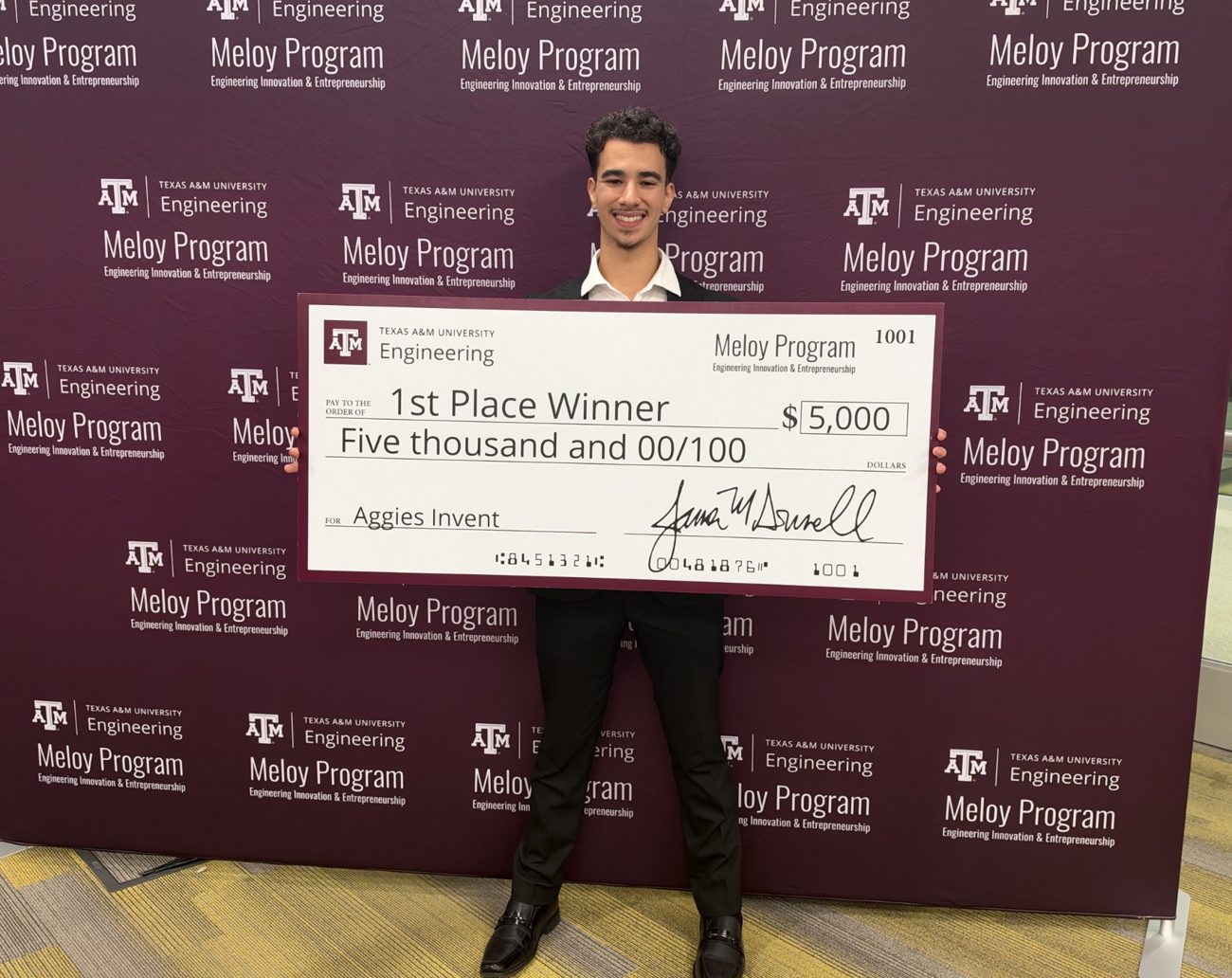
Dhia holding the first place check from Aggies Invent
The problem

A robot's sensors leave the room when the robot does. A damaged ceiling can keep moving after the first inspection.

My role

Electronics, embedded firmware, sensor bring-up, telemetry integration, and running the live demo.

Prototype stack

ESP32-C5 · ESP-IDF · Embedded C · MPU-6500 over I²C · HC-SR04 · UART · Python · browser dashboard

Result

First Place and the Best Prototype Award, after demonstrating the working hardware-to-dashboard flow.

Live demo

The real hardware prototype. The puck sits under a tabletop "ceiling." Pressing the lid down shrinks the overhead distance and trips a possible ceiling lowering alert. Shaking the setup shows up as movement.
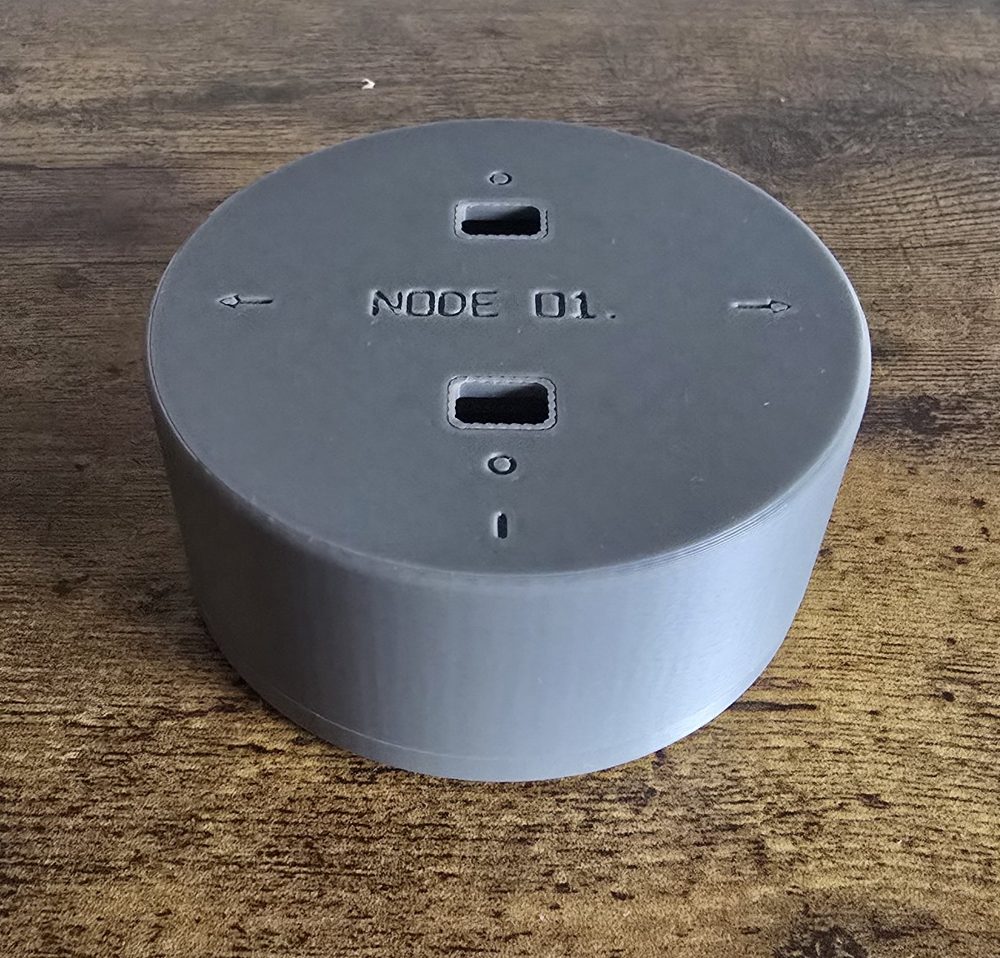
Grey 3D-printed puck enclosure labeled NODE 01
The team's prototype enclosure.

What I built

ESP32-C5 firmwareEmbedded C on ESP-IDF, written and flashed by me
I²C accelerometerBrought up the MPU-6500 and verified it at the register level
Ultrasonic rangingHC-SR04 distance from GPIO trigger/echo timing
Telemetry contractTimestamped serial lines the team's dashboard could parse
End-to-end demoPhysical movement in, responder alert out, live for the judges

The dashboard and Python bridge started as a teammate's package. I connected the board to them and iterated on their behavior with the team. The concept, enclosure and pitch were team work.

How it's wired

What we actually built: a wired USB-serial pipeline. Click a block for details.

I²C GPIO trig/echo UART / USB local web MPU-6500accelerometer HC-SR04ultrasonic distance ESP32-C5my firmware Python bridgeon the laptop Dashboardlaptop + tablet

The data contract

DATA,66249,0.1449,-0.0085,1.0624,,,,317.1
  • DATA line tag
  • 66249 device time, ms
  • ax, ay, az acceleration in g (gravity included, so z ≈ 1)
  • gx, gy, gz left empty on purpose: gyro wasn't needed
  • 317.1 distance, mm

One reading per line, fixed field order, explicit units. Readable in a serial monitor and simple for Python to parse.

Debugging under the clock

Board not where we expected

The flash failed on COM9. The board had enumerated on COM11, a WCH USB-serial bridge. Retargeting the port fixed it.

Two programs, one serial port

The VS Code serial monitor and the Python bridge can't both own the port. The monitor had to be closed before launching the bridge.

Reference that wouldn't lock

"Set reference" kept rejecting readings as unsteady. We relaxed the criteria to tolerate normal sensor jitter while still rejecting real movement.

Laggy interface

Early on, the dashboard felt slow to react. We iterated until it responded promptly during the live demo.

The dashboard

Screenshots are from the dashboard's simulation edition, rebuilt after the competition once the circuit was no longer available. It's the same interface running on generated data. The award-winning demo above used the real sensors.

Next iteration: the proposed field puckConcept only, not built

Proposed hardware

  • 4× DFRobot SEN0366 lasers two facing up, two facing sideways
  • ADXL355 low-noise 3-axis accelerometer
  • ESP32-C5 with integrated wireless
  • Li-ion battery rechargeable
  • Polycarbonate top over a weighted stainless-steel base

Robot deployment

  1. 1Robot carries several pucks
  2. 2Drops one at a chosen spot
  3. 3Puck settles
  4. 4Confirms stable placement and valid readings
  5. 5Keeps monitoring as the robot moves on

Getting it field-ready

  • Replace the USB link with a tested local wireless network, then measure packet delivery, latency and recovery through real obstructions.
  • Validate laser ranging against dust, smoke, angle and target reflectivity.
  • Assess the battery, enclosure, ingress and impact performance. Rugged isn't the same as safety-certified.

What I took away

  • Prove the hardware first. Verifying the sensor with WHO_AM_I gave every later step a known-good starting point.
  • Interfaces are where things break. Many of the bugs lived between layers: ports, file paths and units.
  • Build for the person reading it. The responder view shows less so it says more.
  • Be clear about what was demonstrated. We won with a working prototype and a clearly labeled concept.

Founder · Fall 2025 · Texas A&M

AggieAsk

Ask questions in lecture without raising your hand. Professors see what the whole room is confused about, in real time.

Supported by Texas A&M's Assistant Dean of AIwho invited me to pitch it at his club, Aggie Innovators

The problem

In big lectures, students hold back questions because they don't want to interrupt or look lost. Professors can't tell which part of the lecture lost the room.

The idea

A live, anonymous question board for each lecture. The class upvotes what matters most, and the professor answers the top questions while they're still relevant.

Post anonymously
Upvote questions
Question categories
Mark answered
Pin and prioritize
Course dashboard

How it came together

  1. The problemNoticed in my own lectures: people sit on their questions
  2. PrototypeEarly screens prototyped with v0.dev
  3. FeedbackStudents, faculty and incubator meetings with professors
  4. The pitchInvited by the Assistant Dean of AI to pitch at Aggie Innovators, about 60 attendees
  5. MVPStudent app and professor dashboard built
My partThe idea, every feature and screen flow, the early prototype, and all the outreach and pitching.
Built byA software engineer who built the MVP from my product spec.
Thinking aheadLooked into what classroom use would need: student privacy (FERPA), accessibility and possible research approval, with the Center for Teaching Excellence.

Awards and leadership

First Place · Best Prototype Award

Puck Pal

Aggies Invent, sponsored by Sandia National Laboratories · Nov 2026

A sensor puck that keeps watching a damaged ceiling after the response robot leaves. $5,000 team prize.

See the project

Best Prototype Award

CryoCube

Invent for the Planet 2026 · Team of 6 · 48 hours

Solar-powered cold storage to cut food spoilage, with a camera that flags produce going bad.

My part: the idea of using computer vision to spot spoiled tomatoes, which became the core of our demo. Teammates built the model.

Aggie Internship Club

Events officer · 1,000+ members

Career events that connect students with recruiters and engineers.

  • Built the presentation for a career panel with speakers from Meta, which drew 100+ students

My part: event planning and materials.